

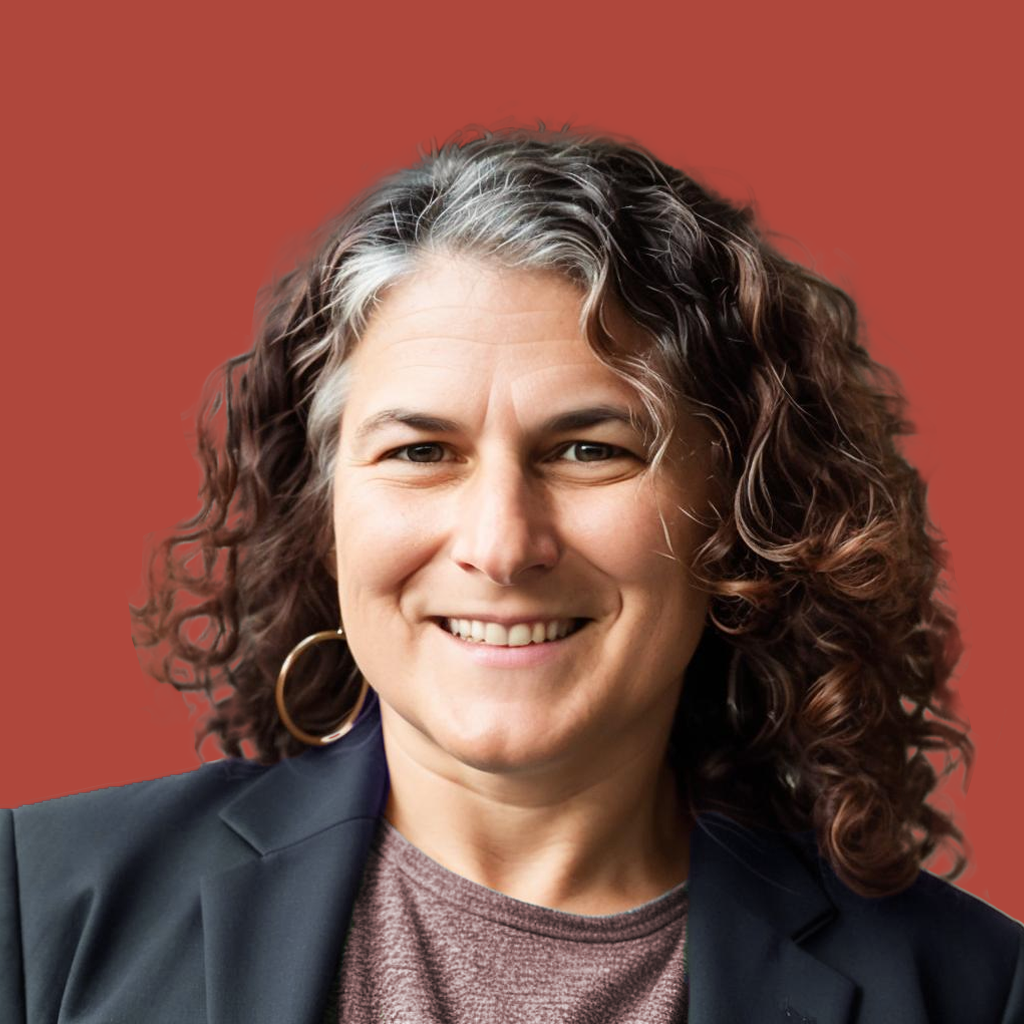
We’re excited to welcome Grace Rachmany as the new Executive Director of the Decentralized Identity Foundation!
Grace joins DIF at a critical time. Digital identity is evolving in multiple directions at once—governments building national systems, enterprises balancing privacy with functionality, Web3 projects rethinking sovereignty. The result? A fragmented ecosystem where credentials don't cross borders, privacy promises fall short, and the people who need accessible identity solutions most often can't reach them.
DIF has always focused on practical, interoperable building blocks that enable real systems to work in production, while prioritizing privacy and sovereignty. Grace brings both the technical depth and community perspective to help us expand that mission. Under her leadership, we'll continue doing what DIF does best—creating the foundational standards and infrastructure for decentralized identity—while bringing more voices into the conversation and strengthening collaboration across traditionally separate ecosystems.
Welcome from Kim Hamilton Duffy
It has been a profound honor to serve as DIF’s Executive Director. I’ve been part of this community since its earliest days – in working groups, on the Steering Committee, and ultimately in this role – and I will continue to enthusiastically support DIF. What has given me the most joy is how DIF consistently attracts and nurtures new participants who volunteer their time, contributing new energy and perspectives that continually strengthen DIF’s culture and momentum.
I’m beyond delighted to welcome Grace into this role. Grace has been deeply involved in building communities around decentralized technology that prioritize individual rights and human agency. She brings a rare combination of governance expertise, practical execution, and a deep understanding of how people collaborate in decentralized environments. I'm especially excited about her commitment to global outreach.
Recently, DIF has built remarkable momentum across AI agents, IoT, secure communication protocols, and emerging efforts like travel & hospitality and creator assertions. Grace is the right person to accelerate this work while we navigate key decisions about how DIF evolves as an organization and best supports its growing community. I look forward to supporting Grace's transition as she leads DIF into 2026 and beyond.
— Kim Hamilton Duffy
Meet Grace Rachmany
Grace is a leader in:
- new economic models and tokenomics,
- blockchain governance and DAOs,
- digital democracy, and
- distributed organizational leadership
She co-founded Sideways.Earth, served on the Supervisory Council of SingularityNET, and has worked with hundreds of decentralized organizations on practical governance, incentive design, and real-world coordination.
Her work centers on infrastructure for collaboration—how communities make decisions, how decentralized systems scale, and how identity frameworks respect personal autonomy. These themes closely reflect DIF’s core values of individual agency, interoperability, and innovation without gatekeepers.
A Message from Grace
“Digital Identity is a hot topic these days, and it’s also a hot mess…”
As I write this post, I reflect on the e-mail I received this morning from my national Digital ID provider here in Slovenia. I went to the post office yesterday to get a higher security rating so I can access my medical records. At the post office, I presented my government-issued residency card. The e-mail from this morning informs me that my physical presence accompanied by my national residency card is not adequate to prove I am human enough to make a doctor’s appointment.
What I need is a passport or national identification document. By the way, if I used a different bank, I could use a bank card, but my particular bank does not have the right security rating. Presumably, of course, my online banking is much easier than other people’s banking as a result of whatever way they do or do not apply digital certificates and 2FA in their system. In any case, off I go this morning to have another in-person experience with the main post office in the nearby city (not the local inferior branch, mind you).
“Complicated processes with heavy bureaucracies for essential services leave us feeling powerless.”
Digital Identity is a hot topic these days, and it’s also a hot mess, as this story demonstrates. Complicated processes with heavy bureaucracies for essential services leave us feeling powerless and at the mercy of large entities. On the opposite end, we feel creeped-out by seamless experiences such as departing from a London airport with absolutely no human looking at any document from the moment we enter the airport to the moment we board (when someone might potentially check our seat number).
I’m absolutely thrilled to step into the Executive Director Position at DIF at this critical moment for digital identity. I was first introduced to DIF Foundation as part of my expertise in DAOs in Web3. Startups like UPort and Sovrin were positioned to make SSI a part of the Web3 ecosystem. But here I am, 5 years later, scratching my head and wondering how we ended up with SBTs, POAPs and EAS. As a Web3 person who has done a deep dive into identity, reputation, and governance, I know the solutions exist, and yet, digital identity implementation is still squarely in the purview of governments and corporations.
“As a Web3 person who has done a deep dive into identity, reputation, and governance, I know the solutions exist.”
Even more disappointingly, while there is public discourse about digital identity, the public seems unaware of what their real choices are. The UK argument begins and ends with “just say no”. The Swiss referendum’s passing with such a thin margin puts tremendous stress on the government to get the implementation perfect. Both of these examples point to missed communication between institutions and citizens, and the UK example shows a gap in public education about how citizens can have more proactive influence in implementation and design of identity solutions that serve the public good.
As Executive Director, one of my objectives is to bring in a wider group of participants to the discussion. I hope to have more outreach to our partners in different areas of the globe, and will be spending the first quarter of 2026 located in Southeast Asia to get to know those of you in that area of the world. As a “crypto native” and governance expert, I’ll be inviting in more members from the Web3 and Network State communities, as we deepen our relationship with the Ethereum Foundation and others in the space.
Finally, I’d like to thank a few people who kidnapped me in Vienna on the first day of September in 2019 and coerced me to attend some thing called, unappealingly enough, RWOT. The kidnapping clan included long-time DIF board member Marcus Sabadello, Kaliya Identity Woman (who made it sound like I was just going to have a nice weekend in Vienna with cool people), Joe Andrieu (who pretended I had submitted a “paper” idea and gave me the RWOT discount rate), and Adrian Gropper (who spent a 4-hour train ride to Prague drawing little diagrams and explaining to me what DIDs and VCs were). Extra special thanks to Kaliya for sending me an email two months ago saying “you might want to apply for this job.”
Thanks to all of you for once more welcoming me into the identity fam. It’s going to be a fun ride!
— Grace Rachmany
Moving Forward Together
Grace’s priorities—expanding participation, inviting overlooked communities into the conversation, and strengthening ties across Web3 and open-source identity ecosystems—align with the direction many in our community have been moving toward. We share the belief that digital identity must be shaped not only by institutions, but by the people who will use it.
In the months ahead, we’ll continue evolving how DIF supports its contributors, including finding better ways to serve our community globally and ensuring our work remains interoperable, usable, and grounded in real-world needs.
Thank you for continuing to advance digital identity ecosystems that empower people and strengthen trust.