


The Decentralized Identity Foundation (DIF) is pleased to introduce the candidates running for a seat on the Steering Committee.
Voting opens today and is open for 7 days. Only Associate members have voting rights. If you are an Associate Member, you should have received your ballot by email. Please contact nominations@identity.foundation if you did not get your ballot.
We asked all candidates the same questions. Their answers are below. We have listed the candidates based on their status and how long they've been a member of DIF. DIF. Associate (paying) members are listed before Contributing members. Please read through the candidate's statements to guide your voting decision.
| CANDIDATES | MEMBERSHIP | POSITIONS | START DATE |
|---|---|---|---|
| ASSOCIATE MEMBERS | |||
| Steve McCown Running for re-election |
Associate | Current SC | Feb 1, 2020 |
| Chatchai Chanvej | Associate | Member | Jan 24, 2021 |
| Kyoungchul Park | Associate | Member | Aug 1, 2024 |
| CONTRIBUTOR MEMBERS | |||
| Ankur Banerjee Running for re-election |
Contributor | Current SC & TSC Chair | Apr 2, 2024 |
| Neil Thomson | Contributor | WG Chair | Dec 9, 2020 |
| Ganesh Sharma | Contributor | Member | May 14, 2021 |
| Thomas Chen | Contributor | Member | Nov 24, 2023 |
| MG (Mohammad Ghiasi) | Contributor | Member | Feb 17, 2024 |
| Saurav Bhattacharya | Contributor | Member | Feb 4, 2025 |
| Makki Elfatih | Contributor | Member | Feb 24, 2025 |
| Amir Hameed Mir | Contributor | Member | Sep 2, 2025 |
| Grant Leech | Contributor | Member | Aug 27, 2026 |
| Dmytro Negodiuk | Contributor | Member | Oct 13, 2026 |
| Sumit Vekariya | Contributor | WG Chair | Oct 15, 2026 |
Associate Members
The following Candidates are dues-paying members of DIF.
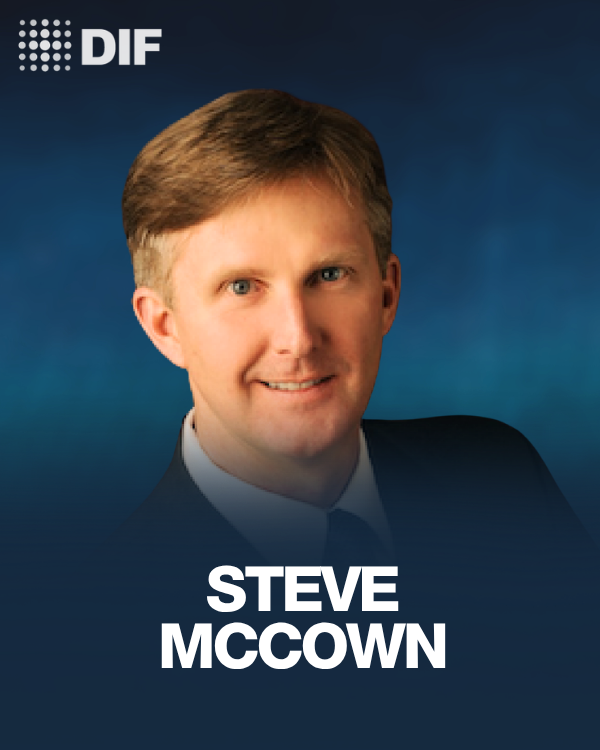
Steve McCown
Chief Architect of Anonyome Labs
Current SC member running for re-election
LinkedIn
Short biography
Steven McCown is a Chief Architect at Anonyome Labs where he conducts R&D for security and privacy technologies. He serves in leadership positions at the Decentralized Identity Foundation, Trust Over IP, and is a Commissioner on the Utah Privacy Commission. During his career, McCown has invented several patented mobile payment and security technologies. While at the Idaho National Laboratory (INL; U.S. Dept. of Energy), he performed security vulnerability discovery for computers and mobile devices. He also created a method for common cellphones to detect ionizing radiation (from “dirty bombs”) and “phone home” to alert first responders. While serving as a U.S. Air Force officer, he led virtual reality research and built post-mission analysis systems for the AWACS aircraft. McCown holds B.S. & M.S. degrees in Computer Science from Brigham Young University, holds current Certified Information Security Manager (CISM) and Certified Data Privacy Solutions Engineer (CDPSE) certifications, and is an inventor on 34 patents.
Interest
During this past term, I have enjoyed serving on the DIF Steering Committee and Co-Chairing the DIDComm Working Group. In the DIDComm WG, we are moving the standard forward to include binary encoding formats that will initially include CBOR and will facilitate additional binary formats (e.g., CESR). Soon, we will undertake adding DIDComm sessions and Post Quantum Cryptography support for DIDComm connections. DIF is very well-positioned to move DIDComm forward into new technologies that will impact efforts across the larger identity industry. Serving with the other Steering Committee members has been a great experience and has enabled us to advance DIF's mission and technology efforts. I look forward to continue serving as a Steering Committee member and advancing DIF's technologies and emerging standards.
In my work at DIF, I have served as a member of the DIF Steering Committee for several years. I have also contributed as a Co-Chair of the DIDComm Working Group to maintain and enhance the DIDComm specification. Additionally, I have represented DIF as a speaker at several conferences including: European Identity and Cloud Conference (EIC; 2024, 2025), Identity Week America (2025, 2026), and the Internet Identity Workshop (many years).
I bring a diverse set of skills that I employ as a member of the DIF Steering Committee. My background is in computer science where I have done R&D in the areas of robotics, virtual reality, online education, computer security (protections), and have even worked as a cybersecurity exploit researcher (i.e., “hacker”). Throughout my career, I have been issued 34 patents, which gives me some unique insights into the legal processes surrounding technology. Each of these combines into a unique set of experiences that I used to further DIF.
Each of these are further outlined in my bio:
Steven McCown is a Chief Architect at Anonyome Labs and conducts R&D for security and privacy technologies, including: encrypted messaging, decentralized identity, reusable credentials, secure payments, ledger-based applications, and other cryptographic solutions. He currently serves in leadership positions at the Decentralized Identity Foundation, Trust Over IP, and is a Commissioner on the Utah Privacy Commission.
During his career, McCown has invented several patented mobile payment and security technologies. In 2008, McCown co-founded RFinity Corporation and launched a mobile payment system for customers to make purchases by tapping their phone on a NFC-compatible credit card terminals. While at the Idaho National Laboratory (INL; U.S. Dept. of Energy), he performed security vulnerability discovery for computing systems and mobile devices. He also created a method for common cellphones to detect ionizing radiation (from ‘dirty bombs’) and ‘phone home’ to alert first responders. While serving as a U.S. Air Force officer, he led virtual reality research and built post-mission analysis systems for the AWACS aircraft.
McCown earned B.S. & M.S. degrees in Computer Science from Brigham Young University (C.S. Master’s Thesis topic: Computer Robotics), holds Certified Information Security Manager (CISM) and Certified Data Privacy Solutions Engineer (CDPSE) certifications, and is an inventor on 34 patents.
Optional question: In the age of AI, what is the role of technical standards, and where does DIF fit into that?
The DIDComm working group provides a standard method for creating both ephemeral and long-lived persistent communications for DID-based identity operations. Recently, it has been shown how DIDComm can easily integrate into a wide variety of identity operations using standards beyond those that are DID-based. This is a very creative development from the DIDComm WG and should be featured so as to attract participation from numerous additional sectors of the identity industry. Additionally, this development has created the ability to delegate a securely authenticated and encrypted communications channel to an Artificial Intelligence Agent. I would like to see this process formalized, so that users desiring to employ AI Agents do not have to grant to the Agents access to their actual identity ‘wallet’ or other identity credentials and can instead provide the delegated channel that will remain under the strict oversight and control of the human owner. This can enable human operators to have much safer control while employing AI Agents that have been shown to learn and adapt.
Optional question: What would you propose to strengthen DIF's value to its members, attract new organizational members, and encourage meaningful participation?
One evolutionary development that the DIDComm WG has done is to sub-divide into 2 groups. The DIDComm Working Group maintains the actual DIDComm specification and participation requires DIF membership and Intellectual Property Rights (IPR) agreements. This group ensures that the DIDComm Spec is formally created for wide distribution and implementation. The second group is the DIDComm Users Group, which focuses on implementations of the DIDComm specification, as well as, new and unique uses of DIDComm. This group is not IPR-controlled and attendance is open to everyone even those who are not DIF members. The DIDComm UG frequently has presentations and demonstrations from implementers of DIDComm who showcase their innovative uses of DIDComm in their respective industries. By separating the DIDComm work into two separate groups, we have kept the DIDComm specification development as a formal process while also enabling the DIDComm UG to flourish with diverse and creative DIDComm applications. This has been a real benefit for DIDComm participation and I would recommend it to other groups that are looking to expand their participation and influence.
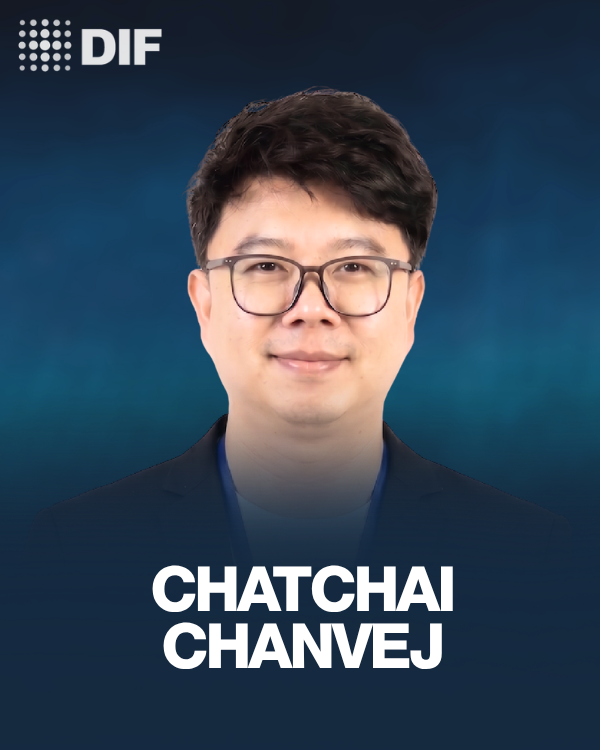
Chatchai Chanvej
Operations Manager of Finema Company Limited
Finema was represented on the SC for the past two years by Catherine S. Nabbala. Following a change in her role at Finema, the company is putting forward Chatchai Chanvej.
LinkedIn
Short biography
I am an entrepreneur and technology business leader dedicated to advancing secure, decentralized digital identity and driving meaningful digital transformation. With extensive experience spanning digital identity architectures, business development, enterprise operations, and cross-sector applications—including healthcare, travel, and restaurant tech—I bridge the gap between technical standards and real-world adoption.
My focus centers on fostering collaboration, streamlining organizational execution, and supporting teams across ecosystems to achieve shared strategic goals.
Interest
A central focus of my participation is expanding DIF’s global footprint, with particular dedication to the Asian ecosystem. Asia is experiencing rapid digital transformation and sovereign identity development; by strengthening regional engagement and cross-border alignment, we can ensure DIF standards are both globally interoperable and locally impactful.
I look forward to supporting our working groups, fostering cross-organizational collaboration, driving open standards, accelerating decentralized identity adoption and maintaining DIF as an open, inclusive, and high-impact foundation for decentralized trust worldwide.
CCI (Covid Credentials Initiative) and GHPC (Good Health Pass Collaboration)
As a Project Manager who has been working and deliver multiple government projects and multiple industry coverage such as digital identity, I would bring in the digitalization and team support to help transformation completion.
Optional question: What is one working group or work item that you would like to see DIF add in 2027?
Cross-border mobility in ASEAN for trade, migrant labor, medical tourism, and education in the Region.
Optional question: What is your vision for DIF over the next two years, and what strategic priorities and key performance indicators (KPIs) would you propose to measure its success?
Collaborative work between DIF’s Claims and Credentials WG with exiting use cases to be implemented and be able to get global recognition. By bridging between existing implemented works with standards and having the standard from DIF to be use as reference standard in the project for KPIs.
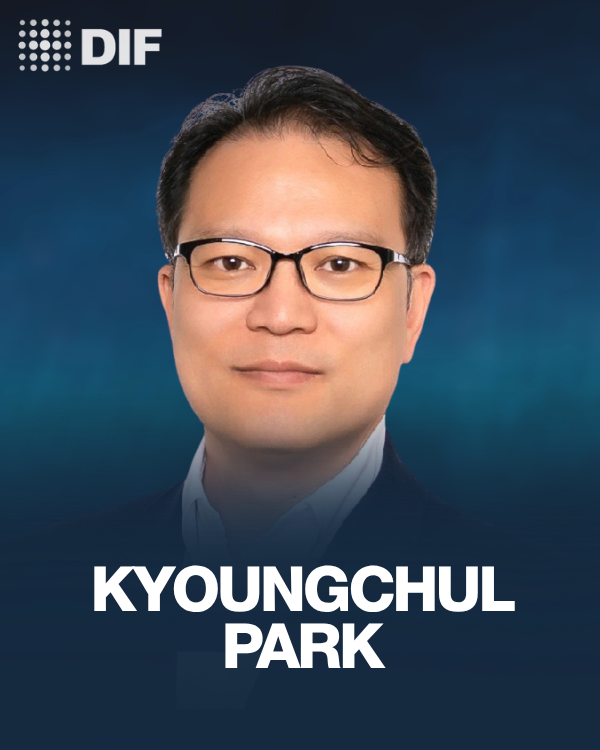
Kyoungchul Park
CEO of K4SECURITY
LinkedIn
Short biography
I am Kyoungchul Park, CEO of K4Security Inc. and Representative of DIF Korea SIG. My work focuses on decentralized identity, blockchain interoperability, digital wallet infrastructure, cryptography, and authentication technologies.
I participate in standards-related activities through TTA, KISA, and CIRPASS2, and have contributed to government-funded projects in decentralized identity, CBDC, and Digital Product Passport technologies.
Interest
My interest in serving on the DIF Steering Committee comes from my work in decentralized identity, blockchain interoperability, digital wallets, and related standards activities. I currently serve as Representative of DIF Korea SIG and participate in standards-related activities through TTA, the KISA Distributed Identity Technology Standards Forum, and CIRPASS2.
My recent work has included government-funded projects related to self-sovereign identity (SSI), decentralized identity, blockchain interoperability, CBDC infrastructure, and Digital Product Passport technologies. I have also participated in the development of blockchain-based SSI systems, digital wallet infrastructure, and interoperability technologies connecting heterogeneous blockchain networks.
If elected, I hope to contribute practical implementation experience from industry and research projects, support collaboration across DIF members, and help strengthen engagements.
I currently participate in and serve as the Representative of the Decentralized Identity Foundation (DIF) Korea Special Interest Group (SIG). This contribution is important because the main goal of the Korea Special Interest Group (SIG) is to distribute DIF’s standardization outcomes in South Korea, report standard-related issues from practical projects back to the foundation, and establish necessary technical standards through domestic and international processes. In our first year, we focused on promoting the Decentralized Identity Foundation (DIF) by conducting three domestic presentations and publishing two articles. Through these activities, I discovered that many public and private projects in Korea hesitate to adopt DIF or World Wide Web Consortium (W3C) standards due to concerns over policy, control, and system management. This highlights the critical need to increase the practical value of standards in real-world applications. To bridge this gap, I actively participate in the Telecommunications Technology Association (TTA) and the Korea Internet & Security Agency (KISA) Decentralized Identity Technology Standards Forum to align their efforts with Decentralized Identity Foundation (DIF) standards and represent the Korea Special Interest Group (SIG)’s perspectives.
Over the past five years, I have successfully organized and operated a steering committee for a Decentralized Identifier (DID) and Verifiable Credential (VC) technology development and diffusion project in South Korea. This technology was selected as an excellent new technology by the Ministry of Science and ICT (MSIT), acquired international patents in the US, Japan, UK, and Korea, and has been successfully operating on the Incheon city blockchain mainnet for over two years. I bring a strong perspective that deploying Decentralized Identifier (DID) technology is not just about software; it is about implementing the philosophy of self-sovereign identity (SSI). I will use my experience to support DIF’s mission by educating and promoting this philosophy to government officials, institutions, and industries, thereby helping to firmly establish and spread technical standards globally.
Thank you for the opportunity to present my vision for the DIFSteering Committee. I would like to outline a core strategic initiative I have designed, as it serves as the foundational context for my answers.
Strategic Initiative Context: Global Interop Project for Digital Trust Ecosystem]
Project Overview: The goal is to achieve DID and VC interoperability by deploying real-world services utilizing Digital Wallets, W3C DID/VC standards, and Digital Assets.
Technical & Social Background: With the completion of the European Digital Identity (EUDI) Wallet specifications via the electronic Identification, Authentication and Trust Services (eIDAS) 2.0 regulation, and the growing social demand for Digital Assets (stablecoins, Security Token Offerings (STO), digital identity, memberships), the timing is critical. Currently, foreigner identity verification heavily relies on physical passports or indirect proofs via credit cards (Visa/Mastercard). The widespread adoption of smartphones makes Digital Wallets an ideal solution for this.
Statistical Market Base: In 2024, South Korea saw approximately 16.4 million inbound foreign visitors (spending USD 14-18 billion) and 28 million outbound Korean travelers (spending USD 20-21 billion). This immense cross-border movement provides a perfect testbed to experiment with and expand the global interoperability of Decentralized Identifiers (DID) and Verifiable Credentials (VC).
Participating Organizations: I have already engaged major South Korean entities for this initiative, including financial institutions, local government bodies and blockchain committees, technology and infrastructure providers, and leading retail conglomerates.
Optional question: What is your plan for the financial sustainability of DIF?
My plan for the financial sustainability of the Decentralized Identity Foundation (DIF) is directly tied to the “Interop Project” outlined above. By initiating this global ecosystem, I will actively guide the participating South Korean organizations to join the Decentralized Identity Foundation (DIF) as paid organizational members. A major technology company is expected to be the first to join, and I will continuously facilitate the onboarding of infrastructure providers, financial institutions, and major retail demand-side partners. This will create a robust, continuous pipeline of membership revenue for the foundation.
Optional question: What is one working group or work item that you would like to see DIF add in 2027?
In 2027, I highly recommend adding an “Interop Working Group” based on the project detailed in the context section. Regardless of the exact naming, this group must focus on actual service deployments across borders. By pushing real-world implementation, we can debate the boundaries between standardized and non-standardized technological domains, identify new critical areas for standardization, and aggressively expand the adoption of existing DIF standards.
Optional question: What is your vision for DIF over the next two years, and what strategic priorities and key performance indicators (KPIs)
My vision for the next two years is to successfully execute the global “Interop Project.” My strategic priority is to establish DIF’s practical role in the real economy by linking our standard outputs directly with society through real-world use cases.
Furthermore, I aim to draft standard proposals at DIF and advance them domestically through organizations like the Telecommunications Technology Association (TTA).
To measure this success, I propose the following Key Performance Indicators (KPIs):
1) The number of new standardization tasks identified through the project;
2) The number of official standardization drafts created; and
3) The number of new paid member organizations joining the Decentralized Identity Foundation (DIF) as a result of this initiative.
Contributing Members
The following Candidates are non-paying members of DIF.
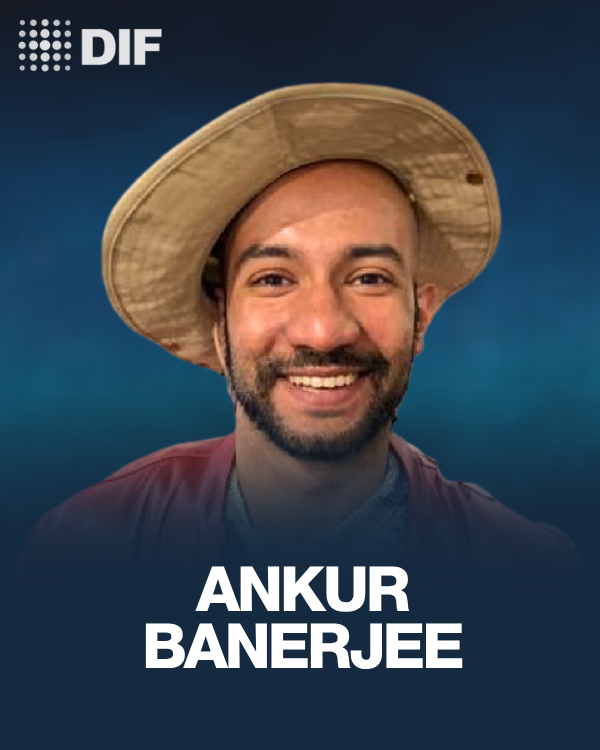
Ankur Banerjee
Senior Product Director of Zama
TSC Chair & Current SC member running for re-election
LinkedIn | GitHub
Short biography
Ankur Banerjee is a product and technology leader with more than a decade of experience across digital identity, distributed systems and artificial intelligence. He has led product and engineering teams from early-stage startups through to scale-ups, and today focuses on turning privacy-enhancing technologies into products that enterprises and financial institutions can adopt. Earlier in his career, he was a founding engineer in a global consultancy’s rapid innovation lab and a technology architect for major banks. He is a co-inventor on patents in applied blockchain and AI, and a mentor in startup accelerators focussed on fintech and diverse founders.
At DIF, Ankur was elected to the Steering Committee in 2023 and has co-chaired the Technical Steering Committee since 2024, working with Working Group chairs to take specifications from proposal through to approval. He was a founding co-chair of DIF Labs, DIF’s incubator for practical, stack-agnostic projects, and is a steward of Friends of DIF, which supports DIF’s participation in the W3C DID Methods Working Group. He also co-developed the DID-Linked Resources specification at the W3C Credentials Community Group.
Ankur speaks regularly at identity and blockchain events and is an advocate for inclusion in tech.
Interest
I’m standing again because decentralised identity is evolving fast, and DIF should keep a big tent that grows with it. TAAWG is working on identity and delegation for AI agents and CAWG on verifiable identity for content credentials, while communities in zero-knowledge identity and onchain compliance are tackling the same questions. I want DIF to be where they all meet. I’ll also focus on DIF’s sustainability and longevity, so members large and small keep finding value and our specifications reach real products.
As co-chair of the Technical Steering Committee since 2024, I’ve worked across DIF’s Working Groups, helping chairs move work items from proposal to approval and keeping the process consistent and fair for contributors large and small.
I’ve contributed directly to the DID Methods Working Group, and I was one of the co-signatories of the letter of intent on DID method standardisation that helped kick off DIF Recommended DID methods. I’ve also contributed to the Identifiers & Discovery Working Group, including stewardship of the infrastructure behind the Universal Resolver, and to Claims & Credentials. I was a founding co-chair of DIF Labs, which gives early-stage projects and independent researchers a lightweight, IP-safe way to incubate practical work at DIF, with mentorship from experienced members.
Beyond Working Groups, I’ve served on the Steering Committee since 2023, and I’m a steward of Friends of DIF, which supports DIF’s participation in the W3C DID Methods Working Group, which is looking at evaluating DID methods in web standards.
DIF’s strength is that anyone can bring work here and get serious, expert feedback quickly. Each of these roles contributes to a different part of that pipeline, where my contributions help move the field forward.
I’ve sat on both sides of the table. Earlier in my career, I was a technology architect for major banks, deciding whether a startup’s technology was fit to go anywhere near production. Since then, I’ve led product and engineering at startups and scaleups selling into exactly those kinds of institutions. That gives me a practical view of what it takes for a specification to become something an organisation will actually deploy.
I also work across communities that don’t often talk to each other: verifiable credentials and DIDs; blockchain and zero-knowledge proofs; privacy-enhancing technologies like fully-homomorphic encryption (FHE); and, increasingly, AI agents and agentic payments. Three years on the SC and TSC have given me a working knowledge of DIF’s governance, its strengths, and its constraints in getting specifications into production.
On the Steering Committee, I’d use this to widen DIF’s big tent approach, so that work like TAAWG’s on agent identity and CAWG’s on content credentials, along with adjacent zero-knowledge and onchain identity communities, sees DIF as its natural home. I’d focus on DIF’s sustainability and longevity, so members of every size keep finding real value in participating.
Optional question: In the age of AI, what is the role of technical standards, and where does DIF fit into that?
AI raises the stakes for identity rather than replacing it. As agents act on our behalf, making purchases, signing up for services and generating content, every interaction raises the same questions. Who is this agent acting for? What is it allowed to do? Can anyone verify that? Those are identity and delegation problems, and they’re exactly what the decentralised identity community has spent years working on.
The risk I see is that the AI industry doesn’t wait for us. If the decentralised identity community doesn’t work hands-on with AI companies to build practical, specific solutions now, the industry will leapfrog straight to centralised, proprietary approaches, and that window is measured in months, not years. We’ve spent a lot of time thinking about identity for human-anchored, infrequent interactions, and we need to catch up with a far faster-paced, human-to-machine and machine-to-machine world.
I’d like DIF to be the default place AI and agentic payments communities come to solve identity: working with the teams shipping agent frameworks and payment protocols today, with a clear path into W3C, IETF, ISO and others once that work is proven in the market.
I’d like DIF to be the default place AI and agentic payments communities come to solve identity, with a clear path into W3C, IETF, ISO and others once that work is proven in the market.
Optional question: What would you propose to strengthen DIF’s value to its members, attract new organisational members, and encourage meaningful participation?
New members: DIF shouldn’t only recruit from companies that already describe themselves as decentralised identity companies. The biggest untapped pool is organisations already solving identity problems without using that label: identity platforms and SaaS providers, teams building AI agents and agentic payments, and blockchain and zero-knowledge communities. A bigger tent means meeting them where they are, including practical work on how DIDs and verifiable credentials coexist with OAuth, OpenID and existing systems, since that’s how enterprises actually adopt new technology.
Value: Members join DIF for different reasons, and we should be explicit about what each gets. For contributors, it’s a fast, expert-reviewed home for their specifications. For larger organisations, it’s influence and early sight of where the market is heading. I’d make that return more visible by highlighting member implementations and helping members take work from specification to shipped product, not just to approval.
Participation: Lower the friction to contribute. That means clearer guidance on where DIF sits relative to W3C, ToIP, the OpenWallet Foundation and others, so newcomers know why to bring work here. It means more DIF Labs-style on-ramps for smaller teams and independent researchers.
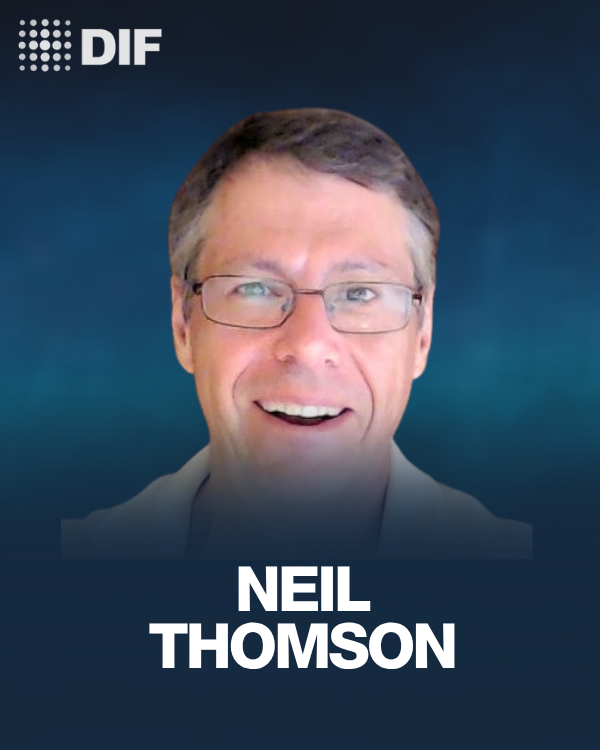
Neil Thomson
Principal Consultant of QueryVision
Current Working Group Chair
LinkedIn
Short biography
Pre-2005
- SW Architect, Senior Director, Development/Product Mgmt in Data Analytics (IBM Cognos, SAP Business Objects)
2005-2020
- Data Analytics, Authentication/Authorization for Data Analytics applications/platforms
* OpenID Connect focus
2020-present
- ToIP/DIF Individual Contributor
- ToIP Data/Privacy WG/TF co-chair (various)
- DIF Hospitality and Travel WF co-chair
Interest
DIF is leading edge in thinking and quality of contributors to decentralized identity and data/analytics in the decentralized identity & digital/verifialble identity/data/privacy space.
Getting this right is essential to adoption and confidence by organizations and everyday users, particularly with respect to identity verification/anonymity and effective data privacy.
• DIF Hospitality and Travel WG (H&T-WG) - co-Chair
• MEA Culpa - I have not participated in the DIF Trusted AI Agents WG
• ToIP - co-chair Data Modelling & Representation WG
• Early involvement with C2PA which led to CAWG
Data Analytics and (related) Metadata Security Architect, Development Director 1996 through 2020s with what is now IBM-Cognos, SAP- Business Objects (patent) and more recently as a Principal Consultant with Query Vision. Responsible for what is known today as Digital Identity and Data Access control via tying personal identity to data access and processing rights in large organizations. A particular focus of my work has been protecting sensitive data and metadata from unnecessary exposure, including to authorized analysts and consumers of analytical results. What has radically changed with online services and specifically with AI is looking beyond authentication and access control to consider what information is actually needed, what can be inferred from it, and how its use and disclosure can be minimized. The challenge is to enable individuals to benefit from these services without requiring them to surrender custody or control of their personal information, or exposing it to unnecessary collection, retention, correlation, and exploitation. I believe my experience brings a complementary perspective to DIF's traditional emphasis on identity, authentication, and credentials, particularly as decentralized identity technologies evolve to support privacy- preserving Personal AI Agents.
Optional question: What is one working group or work item that you would like to see DIF add in 2027?
Travel is possibly the most frequent use case topic in the Digital Identity space. Item: Upgrading Travel Use Cases across DIF WGs to cover realistic identity and personal data exchange between traveler and services in an AI Agent centric environment in a privacy preserving manner based on experience with the Hospitality and Travel experts available via the H&T WG.
Optional question: What is your vision for DIF over the next two years, and what strategic priorities and key performance indicators (KPIs) would you propose to measure its success?
Consumer studies indicate growing interest in AI-enabled personalized services, accompanied by substantial concerns (often exceeding 50% of respondents) about tracking, privacy, and the potential exploitation of personal information. Sources: Expedia (The AI Trust Gap, April 2026); Merkle (Travel CX Imperatives, 2025); University College London (Conversational AI and Privacy, 2025). Governments and international organizations are similarly concerned with AI governance, particularly the protection and appropriate use of personal information. Work within the DIF Hospitality and Travel WG, together with related AI initiatives across DIF and ToIP, suggests opportunities for architectures in which sensitive personal information can be processed within controlled, independently monitored environments. Such environments could enable AI agents to make decisions and deliver personalized services without requiring external agents or service providers to acquire or retain the underlying personal information. In developing this vision, I recognize, with some 20/20 hindsight, that I should have been more directly involved with the DIF Trusted AI Agents WG. Its work on agent identity, delegated authority, and governance provides an important foundation on which to build. My background in data analytics and metadata security, together with our work in Hospitality and Travel, offers a complementary perspective on privacy-preserving information processing, data custody, retention, and the risks of subsequent disclosure or exploitation.
The objective is not simply to establish whether an AI agent can be trusted with personal information, but to minimize the personal information that agents and their service providers need to acquire or retain to deliver personalized services.
Ideally, the traveler would retain control over access to, processing of, and retention of their personal information. This could extend to agent-specific personal data, interaction histories, and derived information, with such information held under the traveler's control rather than retained by individual agents or their service providers.
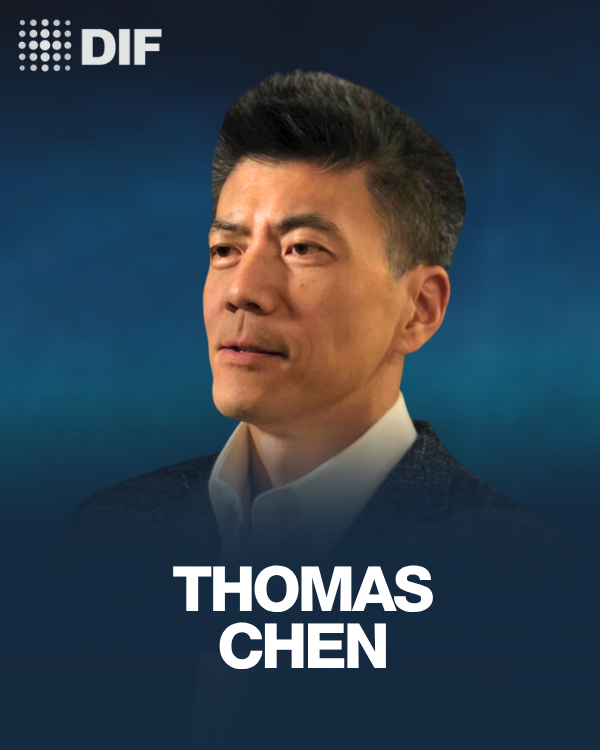
Thomas Chen
CTO of Berify
LinkedIn
Short biography
Thomas is a technology entrepreneur and inventor with extensive experience in digital identity, authentication, and enterprise security. He is the Founder and CEO of nxtlinq and Co-Founder of Berify, where he has worked on bringing decentralized identity and authentication technologies into real-world commercial applications.
His work includes multiple U.S. patents covering identity, authentication, and secure transactions. More recently, his focus has expanded to identity and trust for AI agents, particularly how human and machine identities can be securely linked and managed.
Thomas brings a practical, industry-focused perspective to advancing open standards, interoperability, and broader adoption of decentralized identity.
Interest
My work with Berify and nxtlinq has focused on digital identity, authentication, and trust infrastructure. I would welcome the opportunity to bring my experience in commercial deployment and emerging AI agent identity to DIF, particularly in advancing interoperability, open standards, and real-world adoption.
While I have not yet been actively involved in a specific DIF working group, my professional work has closely aligned with DIF’s mission of advancing decentralized identity, interoperability, and digital trust. Through Berify, IKETech, and nxtlinq, I have worked on practical applications of identity and authentication across physical products, connected devices, and AI-driven systems. I see the Steering Committee as an opportunity to bring this industry experience into the DIF community, contribute more actively to its initiatives, and help bridge standards development with real-world adoption.
My background spans more than two decades of building, scaling, and leading technology companies across software development, cybersecurity, regulatory compliance, digital identity, and AI security.
Earlier in my career, I helped build and scale Parasoft, a recognized leader in software development, testing, and security tools. I also served as Managing Director at Contrast Security, a leader in application security and DevSecOps.
I am the founder and Chairman of TrinityTec, which focuses on security and regulatory compliance across safety-critical industries, including standards such as IEC 61508, ISO 26262, DO-178B/C, and IEC 62304, and is now expanding into AI security.
More recently, through Berify, IKETech, and nxtlinq, my work has extended into product authentication, identity verification, device-level age assurance, and human and AI agent identity and governance.
What I would bring to DIF is a combination of technical understanding, business leadership, and practical experience translating standards and emerging technologies into commercially viable solutions.
I believe DIF has an important opportunity to expand its influence as identity and trust become foundational to an increasingly autonomous digital economy. My focus would be on strengthening industry adoption, building strategic partnerships, supporting organizational sustainability, and helping DIF remain relevant as identity evolves beyond humans to connected devices and AI agents.
Optional question: What is your plan for the financial sustainability of DIF?
I believe DIF’s long-term financial sustainability depends on delivering clear, measurable value to its members while expanding its relevance to industries that increasingly depend on trusted digital identity.
I would focus on three areas: growing and retaining organizational membership, developing strategic industry partnerships and sponsorships, and increasing participation from emerging sectors such as AI, cybersecurity, financial services, and connected devices.
DIF should also demonstrate the commercial value of open standards through implementation showcases, interoperability initiatives, and industry collaboration.
The objective is to build a sustainable funding model that supports DIF’s independence and mission without compromising its commitment to open standards.
Optional question: What is one working group or work item that you would like to see DIF add in 2027?
I would advocate for an initiative focused on AI Agent Identity, Delegation, and Accountability, building on existing DIF initiatives and collaborating with other standards organizations where appropriate.
As AI agents become increasingly autonomous, the industry needs interoperable approaches to establishing agent identity, linking agents to accountable human or organizational authorities, defining delegated permissions, and managing authorization and revocation.
The challenge is no longer simply identifying who is accessing a system, but also determining what an AI agent is authorized to do, on whose behalf, and under what conditions.
I believe this is a natural evolution of decentralized identity and an important opportunity for DIF to help shape the trust infrastructure of the emerging AI economy.
Optional question: What is the number one thing you think DIF offers its members? How can the DIF staff ensure that particular service is at the highest level possible?
I believe DIF’s greatest value is bringing together organizations that might otherwise develop competing or incompatible identity solutions, giving them a neutral environment to collaborate on open standards and interoperability.
For members, this creates an opportunity to influence the direction of digital identity while reducing fragmentation and accelerating adoption.
To strengthen this value, DIF should make participation straightforward, establish clear working group objectives, communicate progress consistently, and help members understand how their contributions translate into real-world implementations.
Ultimately, members should see tangible outcomes from their participation, not simply discussions and specifications.
Optional question: In the age of AI, what is the role of technical standards, and where does DIF fit into that?
AI makes open technical standards more important than ever.
As AI systems become increasingly autonomous, questions of identity, authorization, delegation, and accountability become fundamental to digital trust.
We need interoperable mechanisms to establish who or what an AI agent represents, what actions it is authorized to perform, and how those permissions can be independently verified, monitored, and revoked.
Without open standards, we risk creating fragmented ecosystems where trust and identity are controlled by individual platforms.
I believe DIF is well positioned to help establish these foundations by extending decentralized identity principles into AI-driven environments while continuing to advance privacy, user control, and interoperability.
The opportunity is to make identity a foundational trust layer for both human and machine interactions.
Optional question: What is your vision for DIF over the next two years, and what strategic priorities and key performance indicators (KPIs) would you propose to measure its success?
My vision is for DIF to become an increasingly influential organization in shaping how identity and trust operate across human, device, and AI-driven digital ecosystems.
I would focus on four strategic priorities:
Industry adoption: Expand enterprise engagement and encourage implementation of DIF- supported specifications in production environments.
Emerging technologies: Strengthen DIF’s relevance in AI agent identity, delegated authorization, and machine-to-machine trust.
Organizational sustainability: Grow and retain organizational membership while establishing sustainable funding and partnership models.
Ecosystem collaboration: Strengthen relationships with other standards organizations, technology providers, and industry stakeholders to reduce fragmentation and accelerate interoperability.
I would propose measuring success through membership growth and retention, active working group participation, production adoption of DIF specifications, strategic partnerships, and financial sustainability.
I would also encourage DIF to track the number of successful interoperability demonstrations and real-world implementations resulting from its initiatives.
Ultimately, DIF’s success should be measured not only by the standards it develops, but by their adoption and the value they create for the broader ecosystem.
Optional question: What would you propose to strengthen DIF’s value to its members, attract new organizational members, and encourage meaningful participation?
I believe DIF can strengthen its value by making the connection between standards development and real-world business outcomes more visible.
Many organizations understand the importance of decentralized identity but struggle to translate standards into practical implementations or measurable business value.
I would support expanding industry-focused engagement, implementation showcases, interoperability demonstrations, and opportunities for members to collaborate on emerging use cases.
I would also encourage greater outreach to enterprise security providers, AI infrastructure companies, connected-device manufacturers, and organizations operating in regulated industries.
Equally important is making it easier for new members to participate meaningfully through clear onboarding, well-defined initiatives, and opportunities to contribute based on their expertise.
My goal would be to help DIF build a broader, more engaged membership community while maintaining its independence, technical credibility, and commitment to open standards.
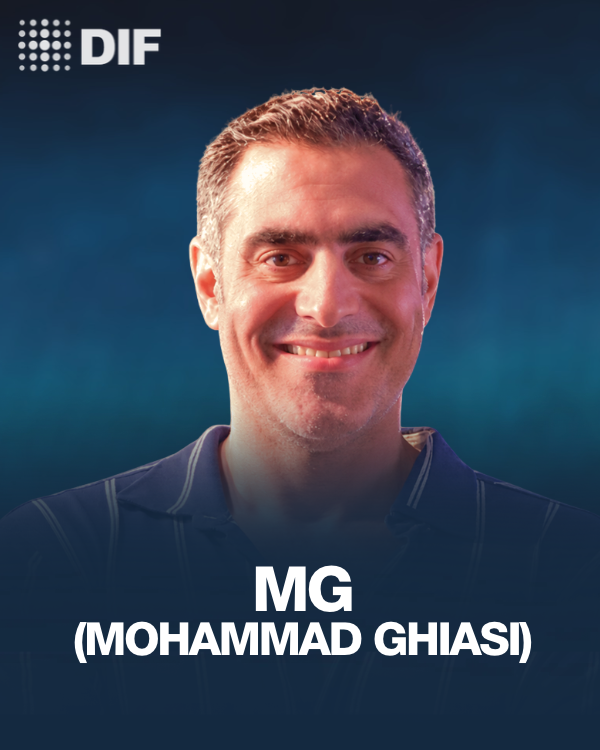
MG (Mohammad Ghiasi)
Founder of GoPlausible
LinkedIn
Short biography
Technology Architect with more than 25 years of operational experience in enterprise systems. Contributing to Algorand blockchain since 2020. DIF contributing member since 2024.
Interest
- DIDs and digital identity
- Well-known DID structures
- Universal resolvers (TS Universal Resolver maintainer and ongoing work, ThisDID.com)
- Verifiable credentials and presentations (GoPlausible.xyz)
• wg-id and wg-trusted-ai-agents
• universal-resolver
• I contributed directly and effectively to Well-known DID structures and DID resolver work items. Helped finalize the Well-known DID structures spec and donated the code for ThisDID and TS resolver, as well as contributing to many DID methods to provide the TS version of their method's reference implementation.
• My PLAUSIBLE protocol is a substantial contribution to wg-trusted-ai-agents as well as AP2, x402, and MPP protocols and specs.
• More than two decades of enterprise systems architecture and implementation in mission-critical industries (banking, heavy industries, and Oil&Gas).
• Strong roots in network and security.
• Long-term experience in core machine learning, statistical data analysis, and neural networks.
• Author and implementer of DIDs and Verifiable credentials for the Algorand blockchain (4 years)
• Author and provider of x402 & MPP protocols and tooling for the Algorand blockchain- Author and provider of all flavors of blockchain MCP for Algorand blockchain
• Praised contributor to OpenClaw project
I humbly think these skills and experiences combined can bring a clearer, future-proof, and practical vision to the identity, credentials, and trust domains of work to DIF.
Optional question: What is the number one thing you think DIF offers its members? How can the DIF staff ensure that particular service is at the highest level possible?
The professional collaboration and brainstorming space. DIF needs to keep high standards of ethical and technical practice, as well as openness to new or radical ideas. The SC mission for this has to be :
• Evidence- and research-led steering
• High professional standards
• Promoting a dialog culture
• Avoiding personal opinions and attitudes
• Openness to ideas while strict compliance with standards
• Everything technical is questionable, and nothing is set written in stone
• Research and development, not the other way around
Optional question: In the age of AI, what is the role of technical standards, and where does DIF fit into that?
By accepting (and not resisting) the paradigm shift for identity, credentials, and trust, which needs deep technical awareness and knowledge of how AI and LLMs work (not coming from some articles and YouTube videos), coming from long-standing practical on-field experience in machine learning and statistical predictive analytics plus neural networks in serious action. We need SC and higher-level staff to be knowledgeable about these; otherwise, the new tech will meet resistance (unfortunately, we are witnessing this already, and that is my main reason to be a candidate for SC). Being a user of ChatGPT or Claude does not give deep awareness and knowledge for this mission.
Optional question: What is your vision for DIF over the next two years, and what strategic priorities and key performance indicators (KPIs) would you propose to measure its success?
• Increased engagement- Increased participations
• Increased contributions
• Increased strategic partnershipsGenerally, the bearish conditions of DIF must change to bullish because, in the AI era, DIF's role can be substantially important, but that is not gonna happen by itself, and it needs to happen top to bottom in an organisational sense.
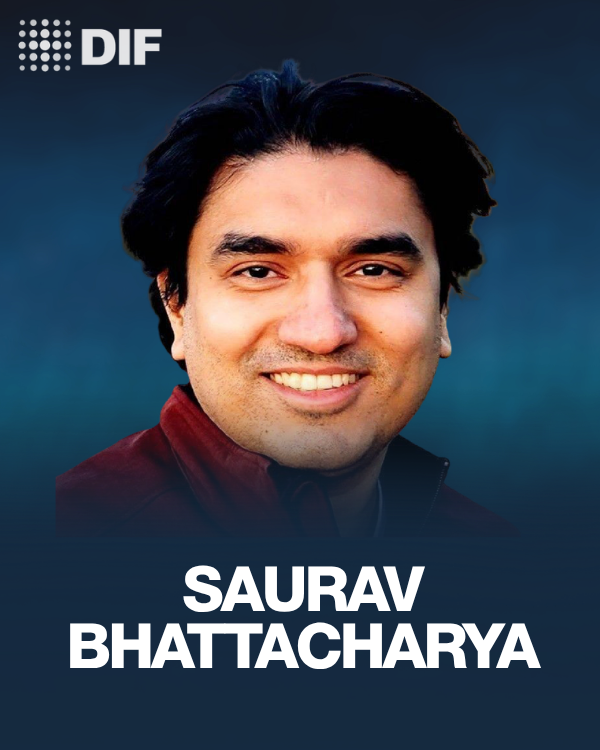
Saurav Bhattacharya
President of The New World Foundation
LinkedIn
Short biography
Saurav Bhattacharya is a computer scientist, researcher, and author recognized for his work in cybersecurity, digital identity architecture, and user authentication systems. He earned his dual degree in Computer Science from IIT Kharagpur and currently works as a Senior Software Engineer at Microsoft.
Committed to open science and technological advocacy, Saurav leads The New World Foundation as Founder and President and serves as Editor-in-Chief of its flagship peer-reviewed publication, the International Journal of Global Innovations and Solutions (IJGIS). His work bridges corporate engineering excellence with open-access research to advance secure, decentralized, and scalable digital infrastructure globally.
Interest
The New World Foundation has been a proud partner of the Decentralized Identity Foundation (DIF) for several years, actively supporting its mission to build a robust decentralized identity ecosystem.
With this nomination, I, Saurav Bhattacharya, pledge to uphold the DIF charter and accelerate the growth of our shared vision. I commit to driving impactful collaboration through research paper series, industry conferences, technical talks, and targeted outreach—positioning decentralized identity as the gold standard for authentication and trust across modern technology systems.
I have not yet contributed to a DIF working group or special interest group, and I want to be straightforward about that. My engagement with decentralized identity so far has been from the adjacent seats I hold: as a Senior Software Engineer at Microsoft working on account registration and signup-fraud prevention systems at scale; as a researcher with over 30 peer-reviewed publications centered on identity and authentication security, including work on decentralized identity verification; and as Track Chair for Identity, Trust and Socio-Technical Governance at ICGIS 2026. I am running for the Steering Committee because I believe that combination — practitioner, researcher, and community organizer — is most useful to DIF at the governance level, and because serving would be the start, not the continuation, of my direct contribution to DIF's working groups.
I bring three perspectives that rarely sit in one seat. First, the implementer's: at Microsoft I have spent years building and defending large-scale account registration systems, where identity decisions meet real adversaries, real fraud economics, and real users who abandon flows that ask too much of them. Standards succeed or fail at exactly that contact surface. Second, the researcher's: my published work focuses on identity and authentication security, including decentralized identity, and I serve as Editor-in-Chief of IJGIS, a peer-reviewed journal in this space. Third, the community builder's: I founded and lead The New World Foundation, a nonprofit research foundation, so I have first-hand experience with the governance, sustainability, and volunteer-coordination problems a foundation like DIF works through every year. On the Steering Committee, I would use that combination to keep DIF's strategy anchored in deployability: specifications that implementers can ship, governance that contributors can sustain, and a mission stated in terms of outcomes for the people whose identities these systems carry.
Optional question: In the age of AI, what is the role of technical standards, and where does DIF fit into that?
AI makes identity infrastructure more important, not less — and it changes what the identity is for. As AI agents begin acting on behalf of people and organizations — booking, buying, negotiating, accessing systems — every one of those actions raises the same questions identity standards exist to answer: who is acting, on whose authority, with what credentials, and how can a counterparty verify all of that without phoning home to a single vendor? Autonomous systems cannot rely on human judgment at each step; they need trust that is machine-verifiable at machine speed. That is precisely the layer DIF builds: decentralized identifiers and verifiable credentials are the neutral, vendor-independent substrate for agent identity, delegated authority, and credential exchange. DIF's role is to make sure that layer stays open and interoperable — specified in the open, implementable by anyone — rather than letting agent identity default to a handful of proprietary platforms.
Optional question: What would you propose to strengthen DIF's value to its members, attract new organizational members, and encourage meaningful participation?
I would work on three things. First, lower the on-ramp: organizations join standards bodies when the path from membership to visible value is short, so DIF should keep investing in implementer-facing artifacts — reference implementations, conformance and interoperability events, and clear guides that take a new member from joining to shipping something credential-based. Second, make participation legible: a visible path from special interest groups to working groups, public recognition of contributors, and regular publication of what each group has shipped and what it needs, so a prospective member can see exactly where their people would plug in. Third, meet members where their problems are: AI-agent identity, wallet ecosystems, and cross-border credential recognition are live concerns for exactly the organizations DIF wants at the table, and programming built around those problems is the strongest recruiting tool a foundation has. Underneath all three, I would push for simple published measures — active contributors per working group, member retention, implementations shipped — reviewed by the Steering Committee on a regular cadence, so "value to members" is something we can point to rather than assert. Thank you again to you and the DIF team for running this process, and to the voting members for their consideration.
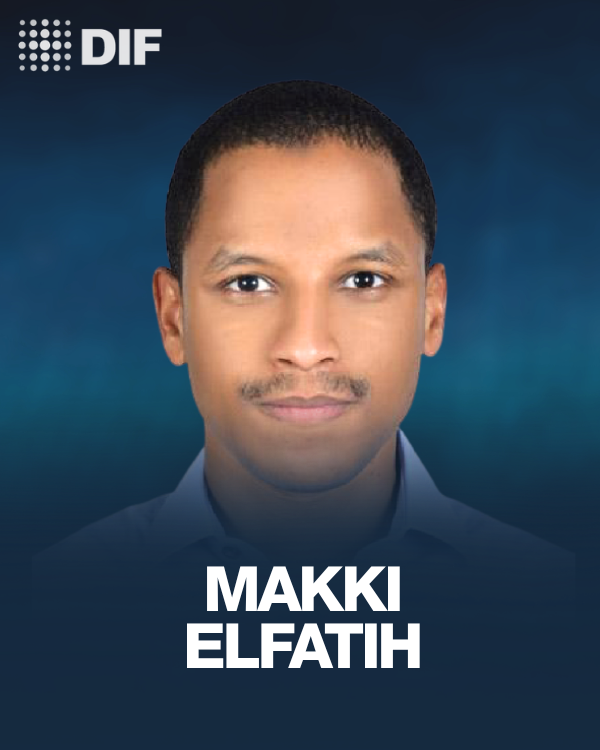
Makki Elfatih
CEO of Hkdolts
LinkedIn
Short biography
Makki Elfatih is a Tier-1 consulting-experienced leader, founder, strategic advisor, and ecosystem architect with more than a decade of experience advising Fortune 500 companies, sovereign entities, and private-sector organizations across North America, Europe, Asia, and the Middle East. As Founder and CEO of Hkdolts Consulting, he advises leadership teams on strategy, technology architecture, operating models, and emerging ecosystems.
Within the Decentralized Identity Foundation (DIF), Makki contributes across CAWG, Hospitality & Travel, DIDComm, Trusted AI Agents, DID Methods, advancing identity, trust, attribution, and interoperability. He is also a leading contributor to C2PA and serves as a Board Member of the Metaverse Standards Forum and a Steering Committee Member of Trust Over IP.
Interest
Makki is committed to advancing open, interoperable, and trusted digital identity ecosystems through practical standards development and cross-industry collaboration. He has actively contributed to DIF across CAWG, Hospitality & Travel, DIDComm, Trusted AI Agents, DID Methods, and HATPro, including working-group discussions, specifications, use cases, and ecosystem initiatives. His GitHub current and forthcoming contributions will further reflect his engagement with DIF’s technical work and open-source community. He seeks to continue this contribution through greater leadership, coordination, and strategic direction as a DIF Steering Committee member.
Trusted AI Agents WG (TAAWG): I'm a contributor to Delegated Authority Evaluations, the group's assessment of authorization approaches for agent delegation. Earlier, I helped shape how the group selects and governs its agent use cases.
Creator Assertions WG (CAWG): I chair the Delegated Creator Taskforce, where I proposed the Delegated Creator (Issue #286) and Creative Contribution (Issue #285) assertions, actively advancing both through open community peer review. Having co-authored TRQP 2.0, I am now supporting its adaptation into a dedicated CAWG TRQP Profile (led by Sankarshan) to link creator assertions directly to trust registries. This entire architecture is already being validated by an independent experimental implementation.
Agentic AI and provenance: I co-authored Agentic AI: A Rising Realm – A C2PA Ecosystem Perspective (July 2025) with Leonard Rosenthol (Adobe) and Karen Kilroy (NYX Code), and presented it to CAWG. It helped frame the agentic scope that CAWG, C2PA and JPEG Trust later took up, including agent identity, delegated authority, and rights and payments for content that agents reuse.
DIDComm WG: Working with the chairs and members, I helped steer the group's strategic direction. I prepared the Strategic Vision document and a costed plan for taking DIDComm to wider industry adoption. The direction the group chose, DIDComm 3.0 within DIF, was a collective decision.
Hospitality & Travel WG: I contributed to the HATPro implementation guidance and to adoption material for small and mid-sized operators.
Why it matters: one question links all of this work: who is acting, under whose authority, and can anyone verify it? That question is becoming central to the AI economy. DIF's working groups each hold part of the answer, and connecting those parts is how DIF becomes the natural place to settle it.
I would bring a view from across DIF's working groups. Delegation runs through TAAWG, CAWG and DIDComm alike, and I've contributed to all three. That has shown me where DIF's groups already reinforce each other, and where good work stalls between specification and adoption.
Optional question: What is your plan for the financial sustainability of DIF?
Associate members fund DIF's operations, so sustainability comes from making membership plainly worth it. I would focus on four things:
- Show the value before asking for money. Publish what each working group delivers to members: specifications, evaluations, implementations, liaisons and visibility. Organizations should be able to see what they get before they're asked to pay.
- Give organizations a clear way in. Make it easy to move from following DIF's work, to taking part, to implementing, to becoming an Associate member, with a clear benefit at each step and no pressure.
- Cost what we deliver. Each flagship work item should come with a recommended budget: the editing, testing, conformance and outreach it takes to reach adoption. That gives the Steering Committee a clear basis for setting priorities, and gives DIF a credible case when it seeks funding from sponsors, partners and grant programs. Funders support work they can see and measure, so a costed plan makes their decision easier.
- Plan graduations so DIF keeps value. When a group graduates, as CAWG will, agree up front on liaison, credit and ongoing collaboration. A well-run graduation is a proof point that brings new members in.
Optional question: What is one working group or work item that you would like to see DIF add in 2027?
A Delegated Authority Interoperability Profile and Conformance Suite, led by TAAWG with the DID Methods and DIDComm WGs.
Delegated Authority Evaluations already compares the main approaches and finds that capability-based delegation fits agents best. The natural next step is a profile people can implement and test:
- Who: how an agent proves who authorized it.
- What: what it may do, and how that scope is narrowed when authority is passed on.
- Revocation: how that authority is revoked.
- Transport: how the authority is carried securely over DIDComm.
The work should include a formal liaison with CAWG's successor organization, because agents acting for creators need the same answers. A conformance suite turns an excellent evaluation into something implementers can build against, and gives organizations a concrete reason to take part.
Optional question: What is the number one thing you think DIF offers its members? How can the DIF staff ensure that particular service is at the highest level possible?
DIF offers neutral, IP-safe ground where competitors can build shared trust infrastructure without any one of them owning it. HATPro Implementation Guide and Delegated Authority Evaluations show this at its best: contributors from competing organizations assessed approaches openly and produced something none of them could have published alone.
Staff can keep that at the highest level in three ways:
- Protect neutrality: keep vendor-neutral processes and IP rules clear.
- Reduce friction: onboard chairs and contributors quickly, coordinate across working groups, and share calendars and documents that are easy to find.
- Make contributors visible: credit members' work publicly and tell adoption stories where the member is the hero.
When contributors feel their work is seen and used, they stay and bring others with them.
Optional question: In the age of AI, what is the role of technical standards, and where does DIF fit into that?
AI makes acting and generating cheap, so verifiable trust becomes the scarce thing. Standards turn trust from a vendor promise into something anyone can check. Agents acting for people and creators need four things at internet scale:
- An identity that can be verified.
- Authority that is bounded, narrows when passed on, and can be revoked.
- Data exchange that preserves privacy.
- An audit trail that shows who authorized what.
DIF is where those building blocks are developed before companies compete on them, and made to work together: DIDs, DIDComm, TAAWG's delegation work, and the bridge to content provenance. As AI platforms decide what data they will accept, DIF can also define consent and privacy clearly enough that saying yes is safe. And because DIF is governed by humans, it is credible as the place to set the rules for the agents that act on their behalf.
Optional question: What is your vision for DIF over the next two years, and what strategic priorities and key performance indicators (KPIs) would you propose to measure its success?
Vision: DIF becomes the trusted incubator for decentralized trust, where identity and agent work starts, proves itself, and then scales or graduates. Each success strengthens DIF.
Priorities:
- Clear paths: every working group has an explicit plan (prototype, graduate or stay), with milestones the Steering Committee reviews.
- Agent trust: delegated authority and DIDComm 3.0 become flagship deliverables, moving from evaluation to profile to conformance.
- Healthy graduations: liaison and lasting credit for groups that move on, starting with CAWG.
- Membership and succession: clear reasons for Contributing members to upgrade, and a pipeline of new chairs.
KPIs (targets set from a first-quarter baseline):
- New Associate members, and Contributing members who upgrade.
- Inbound membership inquiries, and where they came from.
- Ratified specifications, and independent implementations of them.
- Working groups with a defined path, and milestones met.
- Chair seats filled, and active contributors per working group.
- References to DIF work from other standards bodies and from graduated groups.
Optional question: What would you propose to strengthen DIF's value to its members, attract new organizational members, and encourage meaningful participation?
Make DIF the most useful room in decentralized identity, and let that draw organizations in. Three proposals:
- An adoption kit for every ratified specification: a primer, an implementation guide, a conformance checklist and a vendor-neutral business case. This helps the internal champion make the case inside their own organization.
- Implementer roundtables: invite-only sessions where adopters share what worked and what didn't. DIF hosts and nobody pitches, so candor builds trust and new participants come back.
- Visible ways to step up: clear steps from observer to contributor to editor to chair, with mentoring and public credit at each stage. Fill open chair seats through that pipeline.
Organizations join when they see their peers getting real value. They stay when their own contributions are recognized and used.
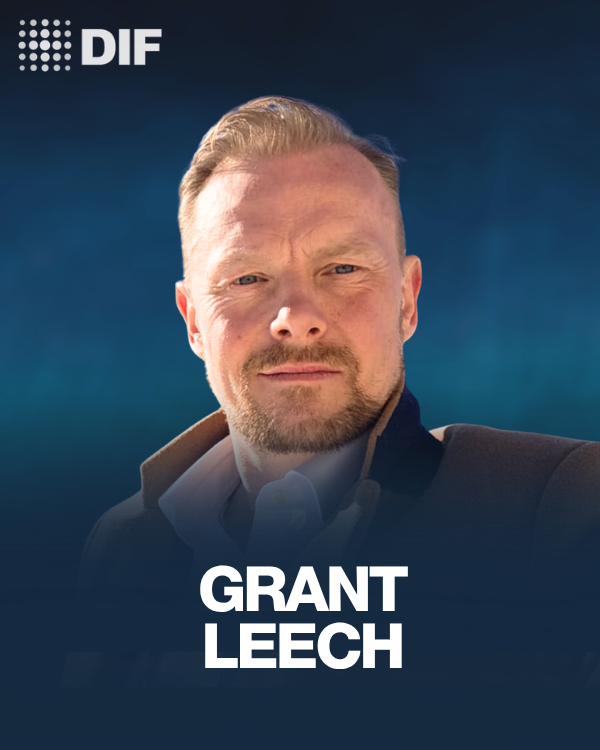
Grant Leech
Founder of Knightsbridge Financial Ltd (KXCO)
LinkedIn
Short biography
Grant Leech, Managing Director, UK & EU, KXCO.ai
As a digital identity specialist, Grant’s work with KXCO.ai is focused on applying decentralized identity technologies to regulated industries. He also leads the application of KXCO’s Reality Infrastructure and Ontology in regulated, real-world operations. KXCO provides a single, independently verifiable record of identity, ownership, authority and history—answering who acted, what they were authorised to do, and what evidence remains—using post-quantum cryptography (ML-DSA) and settlement on Armature L1.
As founder of Verifiable Authority and CareCredits, he worked with KXCO.ai to implement verifiable credentials and the GLEIF verifiable Legal Entity Identifier (vLEI) to deliver real-time, cryptographically proven authority and provenance for people, AI agents, and devices acting on behalf of legal entities.
Under his leadership, CareCredits graduated from the European Commission’s European Blockchain Sandbox (third cohort) after a year of structured regulatory dialogue involving European Commission directorates, central banks, and GLEIF. The project was also a finalist in the GLEIF Global vLEI Hackathon 2025 (Theme 2: Industry 4.0 – Trusted Granular Data for ESG Reporting), demonstrating how verified operational events can become trustworthy Social ESG metrics.
Interest
I am interested in serving on the DIF Steering Committee to help ensure that decentralized identity standards remain practical, interoperable and fit for regulated industries. As Managing Director, UK & EU at KXCO.ai, my work focuses on applying KXCO’s Reality Infrastructure and Ontology—delivering a single, independently verifiable record of identity, ownership, authority and history, secured with post-quantum cryptography (ML-DSA) and settled on Armature L1—to real operational environments.As founder of Verifiable Authority and CareCredits, I have worked with KXCO.ai to implement verifiable credentials and the GLEIF vLEI so that people, AI agents and devices can demonstrate real-time, cryptographically proven authority and provenance when acting on behalf of legal entities. CareCredits, under my leadership, graduated from the European Commission’s European Blockchain Sandbox after a year of structured regulatory dialogue with European Commission directorates, central banks and GLEIF, and was a finalist in the GLEIF Global vLEI Hackathon 2025 (Theme 2: Industry 4.0 – Trusted Granular Data for ESG Reporting), demonstrating how verified operational events can become trustworthy Social ESG metrics.
I have not yet contributed to a DIF working group. KXCO joined DIF in August 2026 and nominated me for this election, and I intend to join two groups:
Trusted AI Agents. The group is defining an interoperable stack for AI agents that act on behalf of users and need mechanisms for identity, authority and governance. KXCO works on the same problem: in KXCO's software an AI agent can only propose, and a proposal becomes a recorded action only when a named person approves it.
Applied Crypto. I would bring the post-quantum work item described in my answer to question 5.This matters to me because I own and operate two home care businesses, in Ireland and the UK, and I want a carer's verified record to follow them from one employer to the next. For that, every employer must be able to check a carer's credentials, and that is the work DIF does.
I have spent more than 20 years building and leading fintech businesses, and I have led M&A strategy across the UK and Ireland.
• I hold a law degree, a Higher Diploma in Computer Science and graduate diplomas in finance and accounting, so I read a charter, an IPR agreement and a specification with the same care.
• I see credentials as an employer who has to check them, through the two home care businesses I own and run.
• I am a co-inventor on Ireland patent application S2025/0544, which covers identity-verified record anchoring.
• KXCO has run NIST's post-quantum algorithms ML-KEM, ML-DSA and SLH-DSA in production since the first block of its ledger in June 2026.I would use this to bring employers and buyers from regulated sectors into DIF, to help the Steering Committee apply its IPR and AI rules as more members use AI tools, and to make post-quantum readiness part of DIF's plan.
Optional question: What is one working group or work item that you would like to see DIF add in 2027?
A post-quantum work item in the Applied Crypto Working Group.
• The Applied Crypto group's scope covers BBS+ signatures, revocation, signature suites and encryption. Its page does not mention post-quantum cryptography, and I know of no DIF work item on it.
• The W3C Credentials Community Group published Quantum-Safe Cryptosuites v0.3 on 22 April 2026. The report is marked experimental, and its suites use ML-DSA-44, SLH-DSA-SHA2-128s, FALCON-512 and SQIsign-I. None of them uses ML-DSA-87, which the US National Security Agency's Commercial National Security Algorithm Suite 2.0 (CNSA 2.0) sets for all classification levels.
• The EU's coordinated post-quantum roadmap sets 31 December 2030 for completing the transition for high-risk use cases, so DIF's specifications need to be ready well before then.The work item would profile ML-DSA (FIPS 204) and SLH-DSA (FIPS 205) for the DIDs and credentials in DIF's specifications, covering all three ML-DSA parameter sets, ML-DSA-87 included. It would publish test vectors, write a guide for issuers moving existing keys to post-quantum ones, and work with the W3C group rather than duplicate it. KXCO can contribute implementation experience, because all of its current signing keys are ML-DSA-87.
Optional question: In the age of AI, what is the role of technical standards, and where does DIF fit into that?
Standards let anyone check an AI agent's work without having to trust the vendor that runs it.
• When an agent sends, signs or buys on someone's behalf, the recipient needs to know who the agent acts for, what it is allowed to do, and whether the record has changed since. A specification answers those questions in a way every vendor can check.
• DIF builds the identity layer for this. DIDs and verifiable credentials can give an agent an identity and a delegation that anyone can verify, and DIF's Trusted AI Agents Working Group is defining "an opinionated, interoperable stack to enable trustworthy, privacy-preserving, and secure AI agents".
• DIF's rule that a person makes, and answers for, every contribution is the right principle for agents too. An agent can propose, and a named person approves and is accountable.
• The credentials an agent carries and the records it signs will be checked for years, so they should be signed with algorithms designed to resist quantum computers. That is why I propose the work item in my answer to question 5.
Optional question: What would you propose to strengthen DIF's value to its members, attract new organizational members, and encourage meaningful participation?
• Give regulated sectors a home at DIF. The Hospitality and Travel Working Group published its HATPro schema on 16 June 2026, which gives that sector a concrete reason to take part. DIF has no group for health and social care. A carer's qualifications and checks matter to every employer they work for, and a Health and Care special interest group would bring those employers in.
• Open a European special interest group. DIF has regional groups for Africa, APAC/ASEAN, China, Japan and Korea, and none for Europe, where I work.
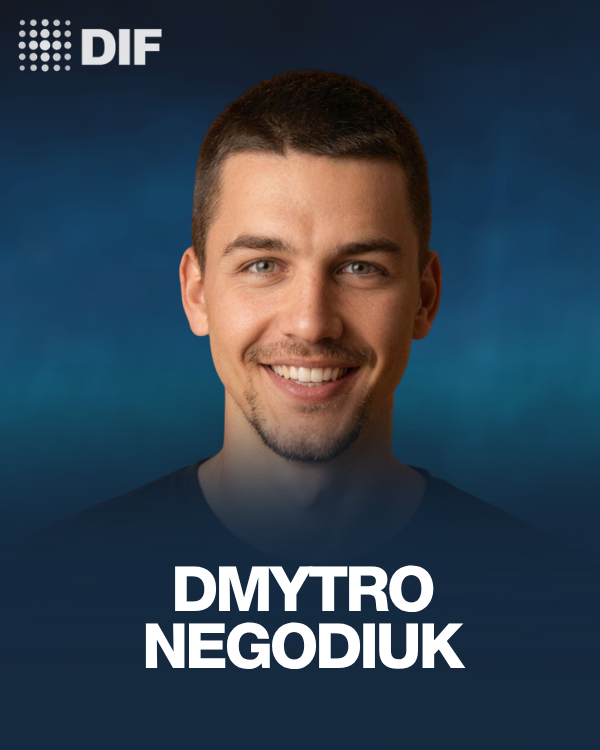
Dmytro Negodiuk
Founder of Negodiuk LLC
LinkedIn
Short biography
Dima Negodiuk, founder of Negodiuk AI. We build AI systems that run a company's back office end to end: calls, invoicing, accounting, warehouse and shipping. I run 5+ businesses of my own on the same stack with zero employees. Every action an agent can't undo waits for a human to approve it.
Outside client work, I joined DIF’s Trusted AI Agents working group, I'm a voting member of an IEEE working group on AI ethics oversight standards, I'm in NIST’s community on AI agent identity, and we signed the White House AI Education Pledge with a lesson for high schools. To educate people in AI is a huge passion for me now: I spoke at Ohio State's Fisher College of Business in October, and in November I'm on the main stage at Great Lakes AI Week at Bowling Green State University.
Interest
In the Trusted AI Agents group I reviewed delegated authority evaluations: on PR #20 I flagged that the AuthZEN section skips the Access Request and Approval profile.
The Trusted AI Agents working group: weekly calls since October, reviews of PR #15 and PR #20. On PR #20 I flagged that the AuthZEN section skipped the Access Request and Approval profile. Bumblefudge asked me to open a PR, so I wrote PR #24.
How do you manage this when each step needs to be controlled with a human or approved by a human, right? That question is my whole business.
I run 5+ businesses of my own on one AI stack with zero full-time employees. On November 6 CoSAI's agent containment paper took four of my proposals into its register, credited.
My agents had my mail, my messages and my files, and one day I asked one to change a nine to an eight and it rewrote the whole document. It just says, sorry, yeah, I was wrong. So, it's not about trust, you need to understand that before every tool, every call, every hook, before every skill or wherever you're using, you need to have like layers. The last layer is a person.
I'd bring the owners' view to every vote.
Optional question: In the age of AI, what is the role of technical standards, and where does DIF fit into that?
Everything changing so fast. In my IEEE working group: first we need to understand the definition. Then we need to understand like the rest, right? For agents the definition is identity: which agent acted, for whom, and who approved it. That ground is DIF's.
Optional question: What would you propose to strengthen DIF's value to its members, attract new organizational members, and encourage meaningful participation?
A small business owner reads his email at 11pm, let's say on Saturday. And he will never read terms or he will never read like 50 pages. He will buy some AI tool and give it access to everything.
So instead of giving him 50 pages, give him one page. And it will clearly say what data the agent can touch. My first proposal on the Steering Committee is that page for every agent spec DIF approves.
Sumit Vekariya
Co-founder of ZKred
Current Working Group Chair
LinkedIn | GitHub
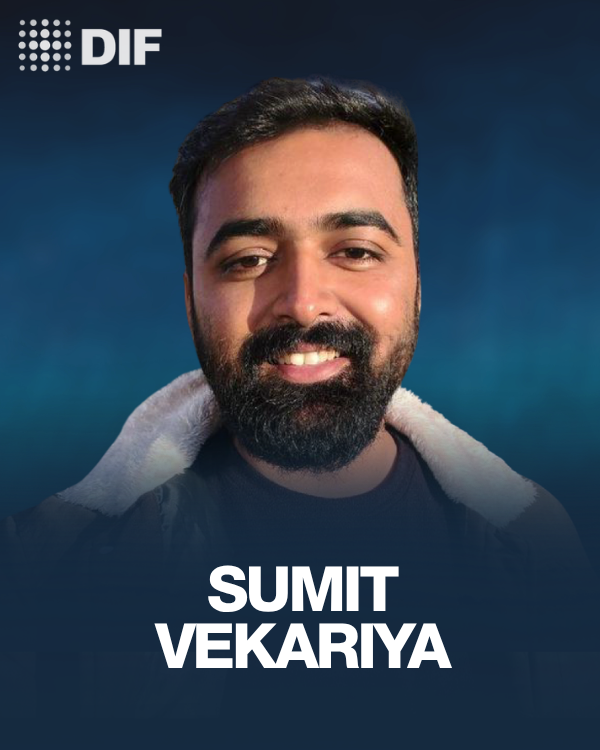
Short biography
Sumit Vekariya is co-founder of ZKred, a small self-sovereign identity team in Vadodara, India, and a contributor at Authentic Memory gUG, a Munich-based non-profit that issues publicly verifiable provenance proofs for archival records (did:web signing with hardware keys, Merkle batching, OpenTimestamps). He wrote the first TypeScript implementation of did:webplus and maintains JavaScript resolvers for did:webvh and did:cid, three of the five DIF Recommended DID methods. His comparative security analysis of did:webvh and did:webplus is accepted at SSR 2026 (Springer LNCS); the work disclosed four upstream bugs before publication. He has spent eight years in open source, with 45+ merged pull requests across projects including Semaphore, ethereum.org and Filecoin, and has mentored 500+ developers at EthIndia, EthSingapore and EthMumbai.
Interest
DIF reserves seats for non-enterprise representation. I would bring a small-team, APAC implementer's view, and the habit of testing specs against running code. Participation to date: individual DIF member since 2024, and through ZKred a Contributor member since October 2026. Merged didwebvh-ts #167; filed didwebvh-py #36 and #37 (#37 fixed in did-webvh 1.0.1); proposed a zkred-did-webvh entry in didwebvh-implementations (#7). My did:webplus issue #36 led the maintainer to update the spec, reference implementation and interop tests, and I verified did:cid resolution against Archetech's public node (archon #863).
I joined DIF in October 2026, and this month I joined the DID Methods Working Group. My contributions so far came from outside DIF and were aimed at DIF's work:
• I built and published @zkred/did-webplus (source), the first independent implementation of did:webplus. LedgerDomain lists it as the first community-produced implementation and runs it against its interoperability test vectors.
• I wrote the first independent academic security and privacy analysis of did:webvh and did:webplus, the first two methods to complete DIF's recommendation process. The paper was peer-reviewed at SSR 2026, the Security Standardisation Research conference. A summary for a general audience is on my blog.
• For that paper I ran a differential conformance study of four implementations: DIF's didwebvh-ts and did-webvh (Python), LedgerDomain's reference tool, and my own. I reported four issues upstream, two of them to DIF's didwebvh-py maintainers (#36, #37) and two to LedgerDomain (#37, #38). All four were closed with fixes within five days, one of them partial. Two of the did:webvh findings independently confirmed issues already recorded in DIF's test suite. The harness, fixtures, and raw results are public.
This matters because the methods are in use: Switzerland's swiyu and British Columbia already serve did:webvh identifiers. Recommendation certifies maturity. Independent testing is what makes it credible, and I want DIF to have more of it.
Three things. First, I am an implementer. ZKred builds issuer infrastructure, wallets, and zero-knowledge verification for verifiable credentials and agent identifiers, on W3C and Privado ID standards. I read specifications line by line and test code against them. Second, I am a security researcher: adversary models, differential testing, and responsible disclosure are my daily tools. Third, I am an independent contributor working from India, many time zones from most DIF calls. DIF has many contributors like me and few of them on the Steering Committee.
Optional question: What is one working group or work item that you would like to see DIF add in 2027?
A conformance and evidence work item inside the DID Methods Working Group. Every recommended method would get a public test-vector suite, including negative vectors, run across all known implementations, with dated results published next to the method's entry. DIF's did:webvh test suite is the model: it had both of my did:webvh findings on record before I found them. Today, establishing which version of a specification an implementation covers takes reviewer time and an email thread. A shared vector suite answers it in an afternoon. I would pair this with a one-page threat model as a requirement for recommendation, so that "recommended" means tested as well as mature.
Optional question: In the age of AI, what is the role of technical standards, and where does DIF fit into that?
Agents will issue, present, and verify credentials at machine speed, often with no human watching. Standards are how trust becomes checkable by code, and the cost of ambiguity scales with automation: a clause that two implementations read differently is a bug a human hits once and an agent repeats a million times. DIF fits in two ways. It already hosts the identifiers and credential formats agents will carry, and it is the place where implementations meet, so it is the natural place to test them against each other. AI-assisted auditing, which Affinidi already ran on the did:webvh implementations this year, finding and fixing 40 bugs, makes the checking cheaper, and it only works against specifications precise enough to check. My own work points the same way: ZKred issues agent identifiers, and in the AgenTrust project I am building a verifier for agent manifests against shared conformance vectors. The lesson is the same as for DID methods: publish the vectors with the specification.
Optional question: What would you propose to strengthen DIF's value to its members, attract new organizational members, and encourage meaningful participation?
Make the path I took the normal path. A developer ships an implementation, finds a gap, reports it, and is in a working group within weeks. Publish a per-method registry of implementations with their test results, so a new implementer sees exactly what to build and how to prove it, and so members can see who is building. Then look at the clock. I am one of many developers in Asia who join DIF calls late at night, because most of them run on Pacific hours. Rotating one call a month and publishing written decisions after each call would widen participation without a budget. I can expand any answer if that helps. Thank you for running the election.
Ganesh Sharma
Director of Trevonix Technologies Ltd
LinkedIn | GitHub
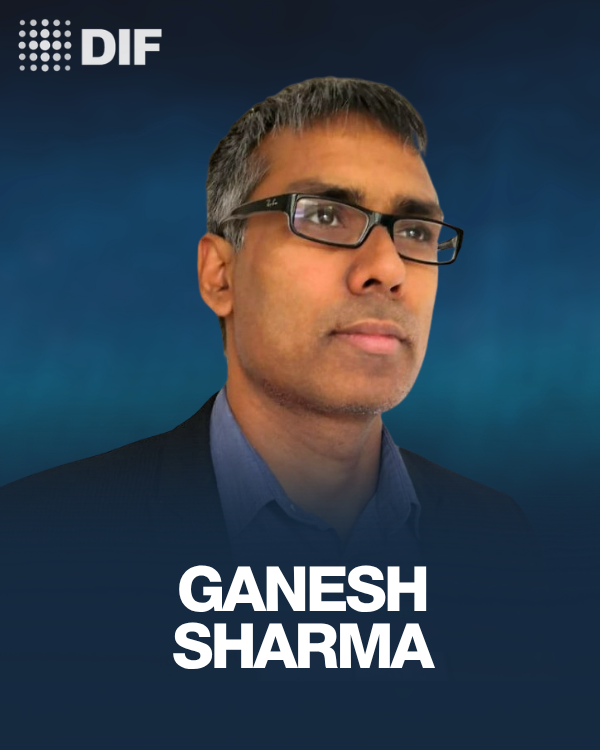
Short biography
Ganesh Sharma is Founder & Managing Director of Trevonix Technologies, an identity and cybersecurity consultancy, with extensive experience helping organisations design and deliver secure identity solutions at scale.
His expertise spans Identity and Access Management (IAM), Customer Identity (CIAM), identity governance, authentication, and emerging approaches to identity security in an increasingly digital and AI-driven world.
Through his work with enterprises and identity technology providers, Ganesh brings a practical, industry-focused perspective on the challenges of establishing secure, scalable, and trusted digital identity ecosystems.
He is keen to contribute to the Decentralized Identity Foundation’s collaborative efforts to advance open standards, interoperability, and privacy-preserving digital identity, helping bridge emerging decentralized identity technologies with real-world enterprise adoption.
Interest
My interest in serving on the DIF committee comes from my experience in the identity and cybersecurity industry and my belief that decentralized identity can play an important role in building more secure, privacy-preserving, and user-centric digital experiences. Through my work at Trevonix, I have worked extensively with enterprise identity solutions and understand the practical challenges organisations face when adopting new identity standards and technologies.I would like to bring this real-world enterprise perspective to DIF, contribute to discussions on interoperability, trust, security, and adoption, and help bridge the gap between emerging decentralized identity standards and practical business use cases. I am particularly interested in how decentralized identity can evolve alongside AI and digital trust technologies.
Amir Hameed Mir
Founder of Sirraya Labs
LinkedIn
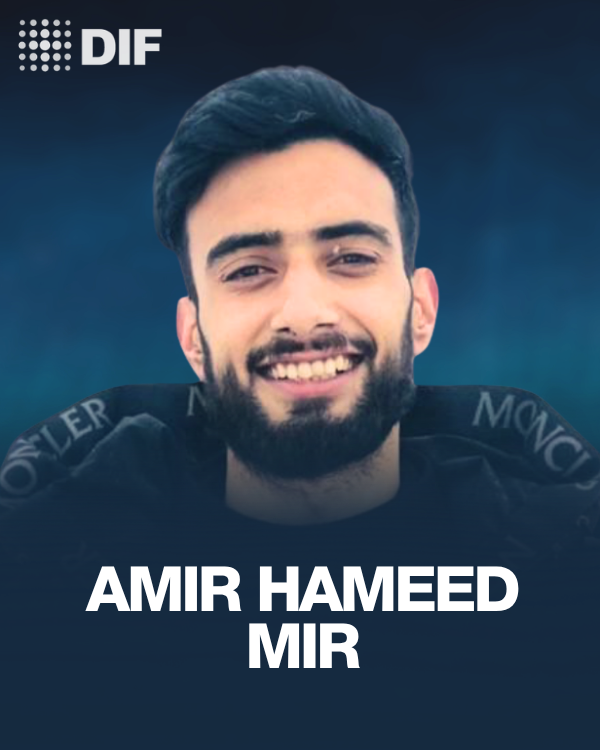
Short biography
Amir Hameed Mir is the Founder & CEO of Sirraya Labs Pvt. Ltd., a founder-led deep-tech R&D company based in Kashmir, India, working across decentralized identity, verifiable credentials, post-quantum cryptography, privacy-preserving computation, and trustworthy digital infrastructure. He is a W3C Invited Expert participating in the Verifiable Credentials Working Group and chairs the W3C UDNA Community Group and Verifiable Supply Chain Community Group. His work focuses on turning decentralized identity standards into practical, interoperable implementations.
His identity work spans UDNA and DID-native addressing, Verifiable Credentials, DID Key Recovery (DID-KR), post-quantum identity, and verifiable supply chains. His DID-KR work explores mechanisms for recovering control of DIDs after key loss while preserving decentralized and self-sovereign properties, including social guardian, deterministic, and MPC-based recovery approaches.
Through the Verifiable Supply Chain Community Group, he works on connecting DIDs and Verifiable Credentials with established supply-chain infrastructure and standards, including EPCIS, to enable verifiable and interoperable supply-chain data.
He also works on post-quantum cryptography for identity infrastructure, including implementations integrating PQC signatures with DIDs and Verifiable Credentials.
Interest
I am interested in serving on the DIF Steering Committee because I believe the next phase of
decentralized identity must connect standards, implementation, interoperability, and adoption more closely.
My work in the identity ecosystem is strongly implementation-oriented. Through UDNA, Verifiable Credentials, DID key recovery, post-quantum identity, and verifiable supply-chain work, I focus on practical challenges that arise when identity moves from specifications into real systems: interoperable identifiers and credentials, recovery after key loss, trust across organizational boundaries, and making existing enterprise data verifiable without replacing established infrastructure.
The Decentralized Identity Foundation (DIF) was established to create an IP-protected environment for decentralized identity-related specifications and open-source code development. DIF promotes the use of DIDs, VCs, and related decentralized identity technologies. DIF maintains more than 270 GitHub repositories that have been contributed or developed by members and working Groups. DIF is committed to fostering an environment where decentralized identity technologies can evolve, mature, and achieve widespread adoption through collaborative effort and strategic partnerships across the ecosystem.


